#32) The Randy Olson 3-Day Videomaking Workshop Template
April 22nd, 2010
HAPPY EARTH DAY!
For the past five years I’ve been conducting videomaking workshops with the graduate students at Scripps Institution of Oceanography. All five year classes of films can be viewed here. In the past year my producer, Ty Carlisle, and I have conducted the workshops with undergraduates at University of California, Merced, and University of Southern California. I mentioned the workshops in my book. Seems like it’s a good time to lay out the details of how we run these events which are both fun as well as a major “awakening” experience for students who have never taken part in video production before. We’re available to run the workshops ourselves (contact us at info AT randyolsonproductions DOT com), or you might just want to use some of what I lay out below for your own workshop. There aren’t any great trade secrets here, so feel free to set up a phone call just to ask our advice. No big deal. At this point our process is the result of five years of fine tuning, with the most recent one being just last week at Catalina Island with 28 USC undergrads.
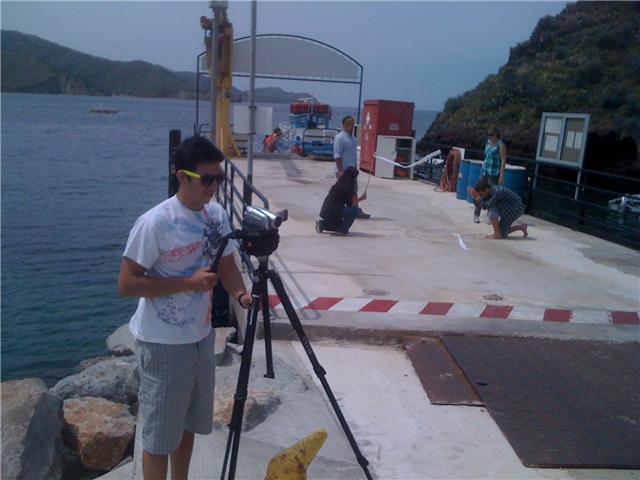
USC WRIGLEY STUDENT VIDEO WORKSHOP: Auteur director bends on a knee
#31) Analysis of the Storytellers Doug Stevenson and Mark Harris
April 19th, 2010
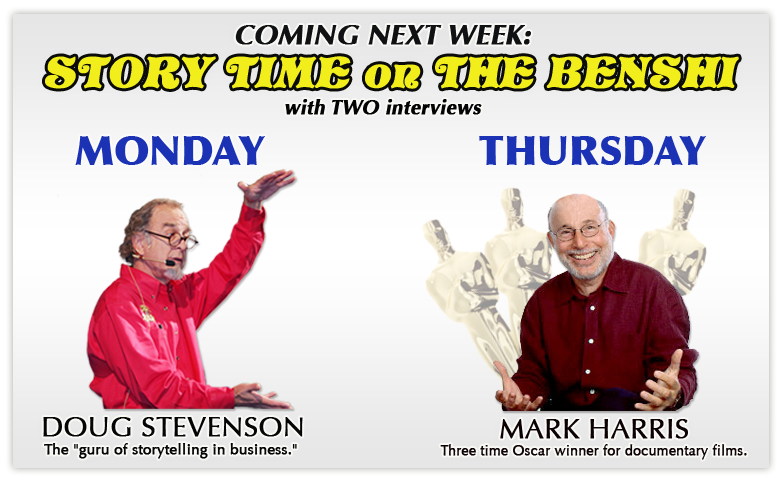
Last week I posted two interviews with professional storytellers Doug Stevenson and Mark Harris. Here I use the four chapters of my book to summarize their main points.
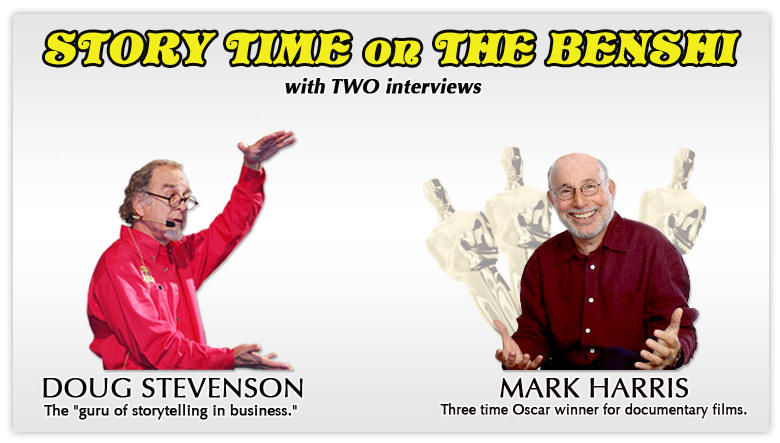
#30) MARK HARRIS, THREE TIME OSCAR WINNER FOR DOCUMENTARY: STORYTELLING IS AS MUCH A PART OF NON-FICTION AS FICTION
April 15th, 2010

Mark Jonathan Harris is one of the many amazing faculty to be found at the University of Southern California’s School of Cinematic Arts. He’s not just a great instructor and a warm and friendly professor. He’s also one of the most accomplished documentary filmmakers of today, having earned three Academy Awards. Similar to all my other interviews on The Benshi, I spoke to him with a fairly specific agenda, seeking his insights on aspects of filmmaking that are relevant to the world of science. On Monday I’ll give my analysis of both of this week’s interviews, pointing to some of the things Doug and Mark said, and talking further about the importance of storytelling to the mass communication of science.
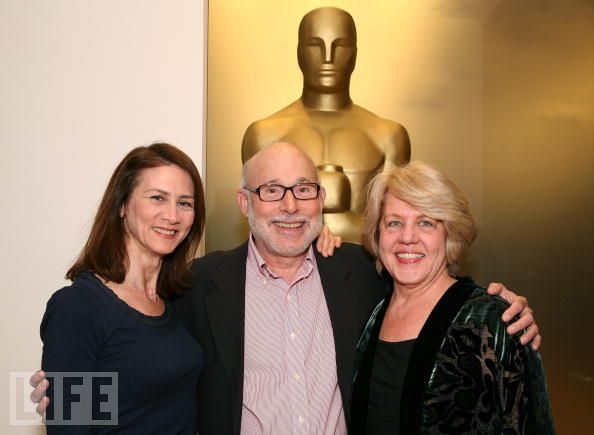
Mark Harris: First news story as a journalist was about his own car
Doug Steveson is someone I met just a week ago on the telephone. It seemed to me that there must be some good storytellers in the world of business, so I did a quick search on Google, and he came up first. He was great to talk with, and I love the part here where he tells a story of visiting London. You can see his life has followed a very logical progression, from actor who told stories to salesman who told stories to instructor who now conveys how to tell stories. Doug’s comments provide another piece in trying to solve the puzzle of why the world of science isn’t better with the art of storytelling.
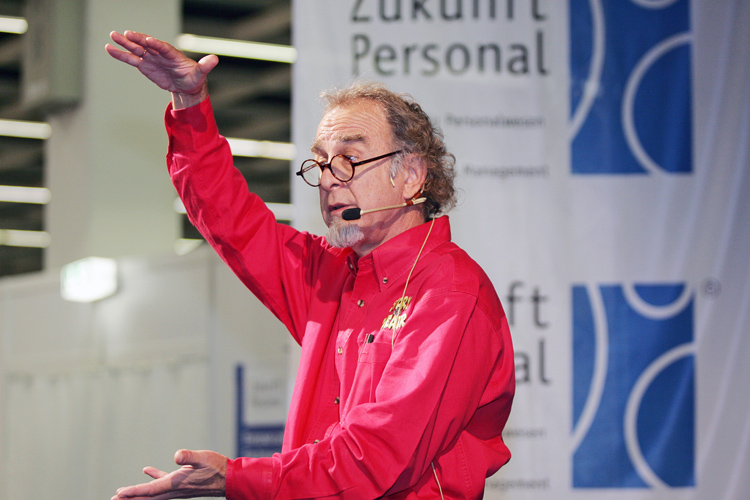
DOUG STEVENSON: An expert on corporate storytelling and in the use of storytelling in business
#27) INABILITY TO LISTEN: “THE SINGLE BIGGEST REASON WHY SCIENTISTS ARE OFTEN SUCH INEFFECTIVE COMMUNICATORS”
April 5th, 2010
WHAT ARE WORDS FOR WHEN SCIENTISTS DON’T LISTEN ANY MORE?
In his review of my book in Science magazine Peter Kareiva (referring to both Cory Dean’s book and mine) said, “Dean and Olson underemphasize the single biggest reason why scientists are often such ineffective communicators. The failure of scientists as communicators is that they do not know how to listen.”
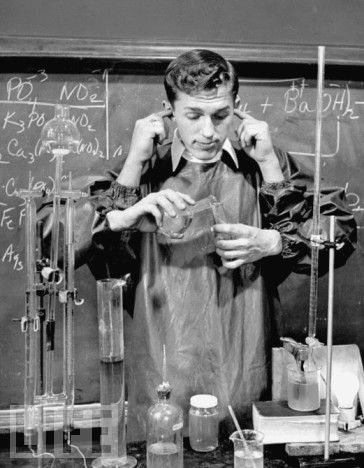
TYPICAL SCIENTIST LISTENING TO LECTURE ABOUT COMMUNICATION
#26) SOLD OUT IN TUCSON (500 SEATS): BEST SIZZLE SCREENING EVER!
April 1st, 2010
We had a tremendous Sizzle screening last night in Tucson, Arizona. We had a full house at The Loft Cinema which is an amazing venue — excellent projection with an awesome sound system. All 500 seats sold out and another 50 or so people were turned away at the door. Huge thanks to super-publicist Karen O’Hara and Karl Flessa of Univ. of Arizona who masterminded the event. They even hired an out-of-work polar bear (global warming victim, obviously) to greet the guests.
The movie was followed by a panel discussion that included U. of Az professors of journalism, cinema, and climate science. Fireworks erupted for a while as two very vocal climate skeptics (or were they deniers, or contrarians, or anti-scientists?) launched into the standard talking points, though I finally cut them off when they got to claiming that the entire climate community bought into global cooling in the 70’s (which isn’t true — it was just a small faction, driven by some misguided media), and the loudest skeptic redeemed himself at the end by saying nice things about my mother (told you they’re good at communication) which brought a round of thank-you-you’re-done applause, offseting the previous boos.
It was an awesome night. Tucson is an incredibly good venue. They also turned out a standing room only audience for my talk during the day. Really good folks who are genuinely interested and concerned. What a great way to lead into the month of April!
#25) THE “DON’T BE SUCH A SCIENTIST” ANALYSIS OF “AN INCONVENIENT TRUTH” (SPOILER: IT ENDS WITH GEORGE LAKOFF)
March 29th, 2010
WARNING: THIS IS A LENGTHY ARTICLE – Please think of this “post” as something closer to a feature article in a magazine. Ryan Mitchell and I feel this is the most important piece we’ve posted on The Benshi to date. It is the written version of a talk I’ve been crafting over the past two years. And it is the application of the contents of my book to the real world.
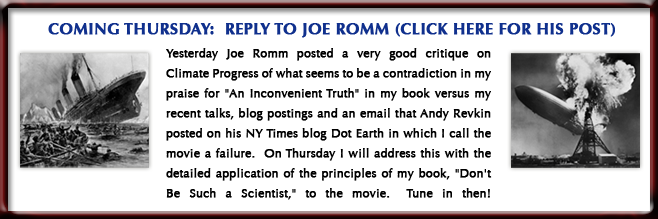
For the past year I’ve been giving talks in which I present my analysis of “An Inconvenient Truth,” using the four chapters of my book to examine, not the scientific content of the movie (which from the first year of its release has been examined in great detail), but rather the way in which “the message” was delivered through the medium of film. For the past few weeks I’ve been planning to present my analysis in written form, but last week I was conveniently cued by Climate Progress blogger Joe Romm when he correctly pointed out the seeming contradiction between what I said in my book about “An Inconvenient Truth,” (which was positive) versus what I’ve been saying in the talk (that the movie was a failure).
#24) TERMINATOR 5: POSTPONEMENT DAY
March 25th, 2010
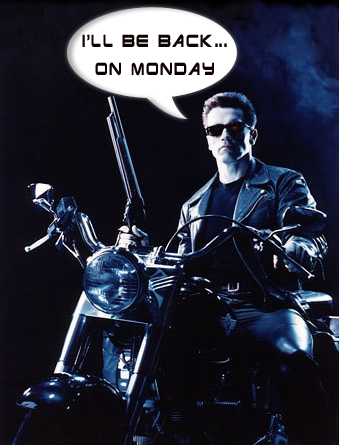
I’m in D.C. this week, giving a series of talks, mostly presenting my analysis of “An Inconvenient Truth,” using the principles of “Don’t Be Such a Scientist.” I was going to present the written version of it here today, but instead will wait until Monday to make sure I get it all right.
In the meanwhile, here’s my screening/speaking schedule for the spring:
MARCH 31 – “Sizzle” Screening at the University of Arizona
APRIL 12 – William and Mary College: “Sizzle” screening and “Don’t Be Such a Scientist” talk
APRIL 19 – Syracuse University, “Don’t Be Such A Scientist” Talk 4:00-5:30pm on the SU campus in Maxwell Hall
“Sizzle” Screening and panel discussion 7:30pm on the SUNY-ESF campus, Baker Lab, Room 145
APRIL 20 – University of Massachusetts, Lowell: “Sizzle” screening and “Don’t Be Such a Scientist” talk
APRIL 21 – MIT: “Sizzle” screening and “Don’t Be Such a Scientist” talk
#23) MARC MORANO FINAL SUMMARY: COMMENTS RECEIVED
March 22nd, 2010
MORANO WRAP UP
Well … we had an interesting run with Marc Morano here on The Benshi over the past month.
I had said from the outset of The Benshi that I’m not much of a fan of massive, free form rambling comment sections on blogs. They do occasionally produce some interesting thoughts, but who wants to read through all the off-topic dreck and frequent belligerence. Last week an environmental communicator told me in an email that she and her colleagues know that Real Climate is an important blog, but they aren’t interested in or versed in all the technical detail so they don’t read it. In contrast, she said they appreciate the broader tone of The Benshi. So it’s in the interest of that broader, less technical approach, that I present this summary of emails received rather than a comment section. I hope I’ve done a good job of including everyone who sent in comments that were “on topic.”