#239) BIDEN: Might as well have had an elevated seat
October 12th, 2012
Anybody see the Jon Stewart/Bill O’Reilly debate on Saturday? Jon Stewart stood on a platform behind his podium that he could elevate up to make him a couple feet taller than his opponent. So he could LOOK DOWN. Biden didn’t need the mechanics. He did it with his mannerisms. Just as I feared in my last post. Oh, well, he still did a solid job.
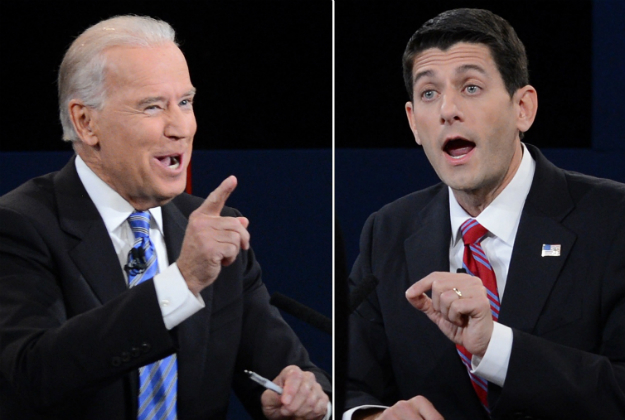
THERE I GO AGAIN. Biden was smart and authoritative, but … alas … he failed to read my last Benshi post (dang, I thought he was a fan). He did a bunch of superficial little things — like smiling — that he just didn’t need to do. They undercut his effectiveness. But were also likeable enough to not be comparable to Gore’s irritating sighing in his 2000 debate.
*sigh*
READ MY SMILE
Television is a superficial medium. Are we all clear on that? As a result, televised debates, by definition, are superficial. The participants can throw out mountains of facts and figures. Most of the public (including me) can’t follow that crap. We’re too busy looking at facial expressions. Which means smiling matters.
Joe Biden definitely talked down to, laughed at, smirked at, scoffed at and generally dismissed his opponent Paul Ryan. Democrats thought it was cool or irrelevant, Republicans thought it was insulting and devastating. What did the general public think? I’m guessing a little bit towards the latter, and the Twitter trend agreed. In my last post I was worried about Biden’s risk of “rising above” and yep, he rose waaay above.
Politico gave a sampling of Tweets from major news folks ranging from Meet the Press host David Gregory (“Biden’s smiling is out of control”) to film critic Roger Ebert (“Joe! Stop smiling and laughing”).
If you wanted a good look at the blindness of liberal wonks all you had to do was watch the MSNBC panel of pundits. Steve Schmidt (who is a very savvy former Republican strategist) was the only guy who got it. He immediately worried about how arrogant Biden came off with the smiling and snark. Others, like Rachael Maddow, showed their complete blindness, focusing on what was said by the candidates. Sheesh. Come on. It’s television. You work in the medium. How can you be so clueless? Same for Chris Matthews, who took exception to Schmidt’s comments. They just don’t get it.
They don’t do they….
AROUSE AND DON’T BE TOO UNLIKEABLE
Politico zeroed in on the comparison of Biden’s performance to Gore’s annoying sighing in his 2000 debate with George W. Bush. But there’s a big difference. Biden was only a tiny bit annoying, while at the same time kinda fun and funny. Which is different than being a big wuss and constantly sighing.
I guess what really interests me with all this is that my book, “Don’t Be Such a Scientist,” had at the core of it a semi-contradiction that many people pointed out after publication, and which I never gave much thought to in the writing. The second chapter delved into the principle of “Arouse and Fulfill,” saying that you need to do something to wake your audience up. But the fourth chapter was titled, “Don’t Be So Unlikeable.” The arouse directive says its okay to annoy people, but the likeability element says don’t annoy people. That’s a contradiction to some extent.
The Biden performance was a textbook example of this. He aroused the hell out of the audience with his smiling. And for some it was unlikeable. But for others it wasn’t (and it really wasn’t — he’s a good guy, and there wasn’t any snideness in his smile). So in the end, it looks like he probably walked the fine line fairly well, with the ultimate assessment being the Politico headline of, “Joltin’ Joe wins the bout.”
Well done, Mr. Smiley.

#238) RISING ABOVE: #1 Thing to Look For in VP Debate
October 10th, 2012
Lordy, Lordy, Lordy … how will he ever do it. How will Joe Biden restrain himself from “rising above” in his debate with Paul Ryan. Yikes. It’s the biggest challenge he faces (audiences don’t like it), but he managed to avoid it with Sarah Palin so I’m guessing he’ll succeed again, though he may tear his hair (plugs) out.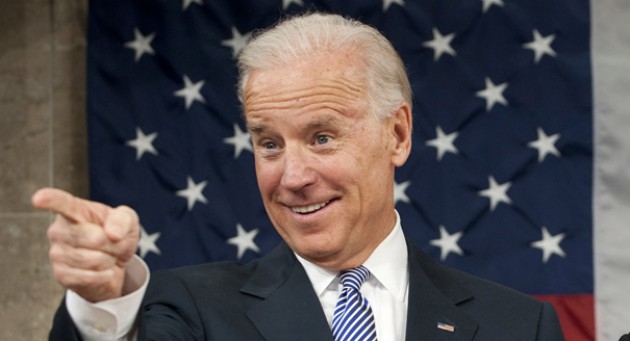 LOOK … I’M OLDER AND SMARTER THAN YOU.
boy
BIDEN VS. PALIN
In my book I talked about the basic problem of, “rising above” — meaning arrogance, condescension, and the idea of looking down on the person you’re speaking to. Audiences have little tolerance for it (unless it’s really funny).
This is what Joe Biden is facing on Thursday night in his debate with the youngster he’s paired up against. I don’t think I could manage to avoid it if I were him, but he faced the same challenge (even bigger) four years ago when he debated Sarah Palin. Back then he just laid low, didn’t commit any blunders, and let her score a supposed victory which was based on the fact that she proved herself capable of speaking in entire sentences and not producing any howlers that she had already become known for.
Here’s something more fun to watch– how many times Biden starts his sentences with, “Look …” As in, “Look, we don’t have time to take apart your budget …” I don’t know why I find it so irritating when someone uses this word over and over again, but he is definitely about the worst. I betcha he’ll say it at least 10 times during the debate. I’ll be counting.
#237) STORY WARS: Romney Vs. Obama, it’s getting VERY serious
October 8th, 2012
You may think this is silly, but it’s not. This is high stakes communication combat. POINT ONE: Obama tells Charlie Rose in July the biggest mistake of his first term was his failure to “tell a story to the American people.” POINT TWO: Romney cleans Obama’s clock in the first debate as Obama tells no stories and comes off as dull. POINT THREE: Romney is suddenly springing to life as a storyteller. Your future may hang on who is the best storyteller. Yes, it is that important.

RIGHT ON CUE. On Saturday Mitt Romney was suddenly bearing his heart in Florida, giving speeches filled with personal stories. For such a dummy, he’s no dummy.
dumby
TELL ME A (SCRIPTED) STORY …
On Saturday, on CBS Evening News, correspondent Jan Crawford, following the newly fired up Romney campaign in Florida, reported on the powerful storytelling he is suddenly engaging in. Here’s the transcript of what she said, in the middle of which she shows him giving a speech.
JAN CRAWFORD: There is one other thing that is so striking that I have never seen it in the ten months as what we saw last night in St. Petersburg. Mitt Romney, a very private man who does not like to talk about himself — which is kind of unusual for a politician — told several personal STORIES at this rally last night, including one that was quite gripping about how a fourteen year old boy — a friend he had known through the church who was dying of cancer — asked Governor Romney to help him write his will. Take a listen to this …
MITT ROMNEY: He talked about his skateboard — who would get that — and his rifle, that went to his brother. I’ve seen the character of a young man like David who wasn’t emotional or crying — he had his eyes wide open. There’s a saying, clear eyes, full heart, can’t lose. David couldn’t lose. I love that young man.
JAN CRAWFORD: And campaign advisors say you’re going to be hearing that a lot more from Mitt Romney in the next four weeks — those kinds of STORIES.
italics
WHO NEEDS SCHTINKIN’ STORIES?
How can this be happening? How can Obama’s advisers be so tone deaf as to not grasp the importance of storytelling??? Why has he not, over the past two years, developed at least one specific story of a Michigan man whose life was saved by the saving of the auto industry. Those stories have to be all over the landscape, yet there is NOTHING of the sort in Obama’s speeches.
Isn’t anyone on his staff familiar with how “The Great Communicator,” Ronald Reagan used specific stories over and over again to bring to life the issues he was addressing? This isn’t a frivolous option. It is THE central dynamic of communicating with the American public. And Obama is blowing it. And now it’s probably getting too late for him to suddenly show up with a bunch of stories.
This “humanizing” video from the RNC goes into detail about Romney’s story with David, the aforementioned cancer patient. David’s parents speak about Mitt’s experiences with their son, giving specific examples of times Mitt was there to support him and ultimately helping him write his own will. This all may have been crafted by his advisers and he might be just as dishonest about it as he was with his sentiments of compassion that got busted by the 47% factoid. Who knows? All I know is that if you look at him speaking in the CBS Evening News clip, he’s actually doing a very convincing and sincere job of talking about the kid. Whatever his advisors are doing with him, it is DEFINITELY working.
Obama supporters should be very concerned. Obama is stepping up to the plate with his communications skills and completely whiffing. This is an American tragedy unfolding, with communication skills at the heart of it.
#236) Communication Trainwreck for the Storyteller in Chief
October 5th, 2012
Couldn’t you just give us a story or two? 
Need we say more? This is from the website of Salon.com yesterday. Pretty much says it all.
yikes
COMMUNICATION DEBACLE
You know … he just … I mean … why didn’t he … couldn’t he have just … Mr. President, I have a book for you to read.
Back in July there was an interview by Charlie Rose for ABC News in which he asked the President about his biggest mistake. Obama answered, “The mistake of my first couple of years was thinking that this job was just about getting the policy right. That’s important. But, the nature of this office is also to tell a story to the American people.”
Um, yeah. So are you gonna make sure you correct for that in your big debate?
How did this happen? How did he identify, on national television, his own problem, then fail to rectify it in the most important debate of his life?
I’m very sad about this. Who coached him? What were they thinking? And how did he end up being so boring?
#235) Romney Learns the Power of Specifics
October 2nd, 2012
The power of storytelling rests in the specifics. You can bet that Romney wishes he’d rounded up his numbers and only talked about “half of the American public” instead of “the 47%.”

Obama’s number is 44. Romney will go down in history stuck with the number 47.
oops
THE POWER OF SPECIFICS
One of the fundamental rules I talk about in my storytelling workshops is that “the power of storytelling rests in the specifics.” It’s one of those simple rules that you may have committed to memory, but you’ll still fall victim to it because it’s much easier to generalize than to nail the specifics on anything. So it bears repeating often.
If you want to see an example of it in real life, just look at poor Mitt Romney. Let’s consider what would have happened, if on the leaked video Romney had said, “There are roughly half of the people who will vote for the President no matter what.” Would it now have much impact for people to show up at rallies with signs saying, “I’m one of the half.” Would that be very memorable? Would people even know what they’re talking about, or remember it a month later? If you wore a t-shirt saying, “Half” would most people make the connection? No, it would have stuck around for a week or so then faded into the noise of the campaign. But that’s not what he said.
He said, “47 percent of the people.” And with that he took ownership of a specific number for probably the next few years. If you walked around town right now with a t-shirt saying, “47%” just about everybody would know exactly what you’re talking about. Half can have lots of other meanings, but 47? What else does that say to you right now? Nobody else owns it. It’s his.
Unfortunately for Mitt, he was very, very specific. And now he’s learning the hard way about the power of specifics. You want to tell a strong story, you’ll want to talk about the 47 percent instead of the roughly half. He told a strong story. Now he’s stuck with it.
And the greatest irony is that the biggest thing dogging him right now in his campaign rhetoric is the lack of specifics in what he has to say about budget cuts. So in two ways he’s learning about the power of specifics, and the weakness of their absence.
#234) “Strategically Managing Uncertainty”
October 1st, 2012
In the Q&A after my talks I’m often asked, “How do we deal with uncertainty?” Andy Revkin had an excellent post on this on Thursday about Rachel Carson’s approach to uncertainty presented in a powerful study from Walker and Walsh celebrating the 50th anniversary of the publication of, “Silent Spring.” The answer I have always given audiences about uncertainty is that you need to be very, very careful about it. This study says the same thing, saying you need to “strategically” manage it.
What do climate skeptics have in common with this goddess of the environmental movement?
carson
GOOD SKEPTIC, BAD SKEPTIC
It’s really a fascinating article that Andy Revkin brought to his audience’s attention on Thursday with this blog post. In honor of the 50 year anniversary of the publication of Rachael Carson’s landmark book, “Silent Spring.” He points to a recent article by two researchers of rhetoric who basically say Rachel Carson used a lot of the same logic that today’s climate skeptics (and ozone skeptics and vaccination skeptics and cigarette smoking skeptics) use.
As Naomi Oreskes and Erik M. Conway told about in their book, “Merchants of Doubt,” the skeptics have perfected the art of “doubt casting.” They’ve refined the ability to attack entire institutions of thought simply by asking the question of, “How can we be sure?” over and over again.
The data say the climate is going to get very warm. Yes, the climate skeptics reply, but you’re not 100% certain about that — so we should be careful about acting if we’re not sure of things.
The two researchers examined Rachel Carson’s detailed notes for her book and found the same form of logic — casting doubt on everything the pesticide makers said, talking about both ignorance and uncertainty, ultimately saying we can’t be certain these poisons aren’t poisoning us, so we should be careful of their use.
The bottom line, which is a little unsettling is: doubt casting on pesticide producers = good, doubt casting on climate scientists = bad.
#233) Does the Title of Your Talk Need to be a Question?
September 27th, 2012
Do you really need your title to end with a question mark? Is this a hard fast rule? Does a score of 72-0 for last year’s TED MED talks tell us anything on this? Is this blogpost going to consist only of questions?

Is it even possible to give a TED MED talk with a title that isn’t a question?
??
IS THIS QUESTIONABLE?
Ever heard of TED MED? Do you know about this division of the popular TED Talks? Did you read the excellent article in The New Yorker in July about the TED Talks? Did you catch the part in it about how extremely “hands on” the organizers are with the speakers they select? Wouldn’t you think in a group of 72 speakers there would be a few talk titles that wouldn’t end in question marks? But have you looked at the 72 talk titles from this year’s TED MED conference? Does it really seem logical that EVERY single title would be a question? Did it happen randomly that every speaker came up with their own title as a question? Or did someone mastermind it?
So what’s the title of your next talk???
#232) THE VIDEOMAKING WORKSHOP: 11th Time Produces Domino Effect
September 23rd, 2012
It’s about variation. If you get enough of it, cool things start to happen. This is the problem with cautious, conservative, non-innovative approaches to communication that fail to foster variation and diversity — they stifle creativity. And guess what, when given the opportunity, science graduate students are capable of amazing creativity in communication. This is what we saw last week with the University of British Columbia’s TerreWeb program.
space
spacec
THE DOMINO VIDEO: PERFECT EXECUTION. It’s about simplicity and resonance. All 5 of the student videos from last week’s workshop at U.B.C. were great, but this one has a little something extra that makes it quite possibly better than any of the previous 65 videos (from about 250 student pitches) that have been produced in the 11 iterations of my 3 Day Intensive Videomaking Workshop since 2005. And keep in mind, this video was made by SCIENCE graduate students with ZERO previous camera/editing experience, given ZERO budget, and just TWO days. The two “actors” are the students themselves (the first person to appear is Megan Callahan who wrote and directed it). Imagine this video with professional actors and the same production crew that made the awesome OK Go music video with dominos. And no, this wasn’t just a cheap rip-off of that video — there is a biological significance to “dominos” namely “the domino effect” that can be a part of collapsing food webs and ecosystem dynamics in general. Which is why there’s an element of resonance to this simple little video. If you cast the net wide enough (i.e. 250 student pitches) you eventually catch winning ideas. That’s the whole secret to innovation — it’s about the variation.
vary mu
hich so
THE U.B.C. TERRAWEB PROGRAM: BEST GROUP YET (NUDGING OUT THE NORWEGIANS)
A week ago I ran the 11th iteration of my 3 day videomaking workshop — this time at University of British Columbia with the science graduate students in their TerreWeb program. As you can see from the letter below, it was a wonderful experience for everyone. There’s three reasons for this. First, their folks did a tremendous job with the logistics (specifically: Julie Wilson, Dan McKinney, and Julia Dordel). Second, the students had absolutely perfect attitudes (filmmaking is a COLLABORATIVE process — attitude is crucial). Lastly , the workshop benefited from the knowledge gathered in the 10 previous versions over the 7 years before. It’s come a ways since the first group in 2005, HOWEVER … there’s a little bit of a wrench in that thinking when you consider that two of what I would say are the top ten videos of all time (the hilarious Turtle Victims Unit video and the sexy Marine Mammal Noise video) came from the very first group — they set the bar high from the start.
borium
A SOLID MODEL
I first devised this workshop in 2005, modeling it on my experience in the Graduate Production Program at the USC School of Cinematic Arts in the mid-90’s. The process at USC involved giving all 50 students in a class the chance to pitch their individual ideas out of which 4 were selected. The selected students become the directors (they still do it this way) and are given a sizable budget, the others end up signing up as crew. It was an intense and fairly horrible process, but also a good model of the real world. I suppose I ended up with not-that-bad of feelings because I got chosen as one of the 4 directors in my class, but there’s also a solid mechanistic justification for this model as I explain below.
do you?
WHY IT WORKS I: INDIVIDUAL VARIATION THROUGH PITCHING
In my workshop, the exercise begins with ALL 25 students in the group given equal opportunity to be the 5 eventual directors as everyone gets 3 minutes on the first morning to “pitch” their idea for the one minute film they would like to make. Every time we do this the words of the great evolutionist Stephen Jay Gould echo in my mind as he used to talk about natural selection as a two step process — variation then selection. It’s the same thing we’re doing in this exercise — fostering WIDE variation at the individual level. And you do get to hear some wild and wacky ideas (my all time favorite, which didn’t get picked, was a Scripps student wanting to make a video about the fact that shark fin soup was being served at Hong Kong Disneyland — his idea was a Mickey Mouse character speaking into camera, then a guy steps out with a machete and wacks off Mickey’s ears — absolutely brilliant, but too terrifying for the students to pick it).
It’s this variation stage that is so crucial. This is the complete NON-COMMITTEE element in the process (committees are THE death of innovation) and keeps the videos from all looking identical year after year. You want to know how to foster innovation and creativity — it’s at the level of the individual. But that said, committees are important in the second part of the process — the structuring.
why are you still reading these?
WHY IT WORKS II: STRUCTURE, STRUCTURE, STRUCTURE
Once the wildly varied ideas are presented, it then comes time to get a little more serious and start applying structure to the process. The students vote, the 5 most popular are chosen — no matter how crazy and unrealistic they might be. The other students are assigned as crew, then in the afternoon of the first day the real world starts settling in as I force each crew to present their “shot list” and explain how they are actually going to bring the idea to life. Giant visions of grandeur are discarded for smaller, more realistic shots, and over-ambitiousness is identified and brought into check. For example, in this last batch at UBC, the “jumping off the ledge” video initially had two examples of testing theories, but once selected the filmmaker quickly realized that she would do better to do just one of them really well, which they did (or at least really well given the constraints).
please don’t copy paste me
CONSTRAINT FOSTERS CREATIVITY
If there’s one clear pattern that emerges from these exercises it is that it’s the constraints that allow the students to work efficiently and creatively. By setting the length at EXACTLY 60 seconds they automatically are bumping up against a major constraint, which is at first frustrating (students always ask to make their video longer, to no avail), but the set length eventually becomes actually comforting as they don’t need to worry about this particular variable. And forcing them to compress their story leads to all sorts of creative solutions.
The absence of any budget and the limitations of time also make it into one big exercise in problem solving, which with a team of 4 bright minds becomes very fun.
The bottom line is that in 11 incarnations there’s never been a single video that has failed to make sense and draw cheers from the crowd at the final presentation. And for many it is truly a life-altering experience as they see for the first time in their life the transformation that happens when an idea goes from paper to screen. The overall proof of the effectiveness of the workshops is in the aftermath as everyone involved takes in “what just happened.” Below is a letter from the Suzanne Simard, head of the TerreWeb program at UBC that sponsored the last workshop. It sort of speaks for itself. I really enjoy doing the workshop. If you think you might be interested in running one I’m more than happy to answer questions. You can write to me at: info@randyolsonproductions.com

#231) Driving a Cadillac
September 20th, 2012
What’s next? A few words about my new movie.
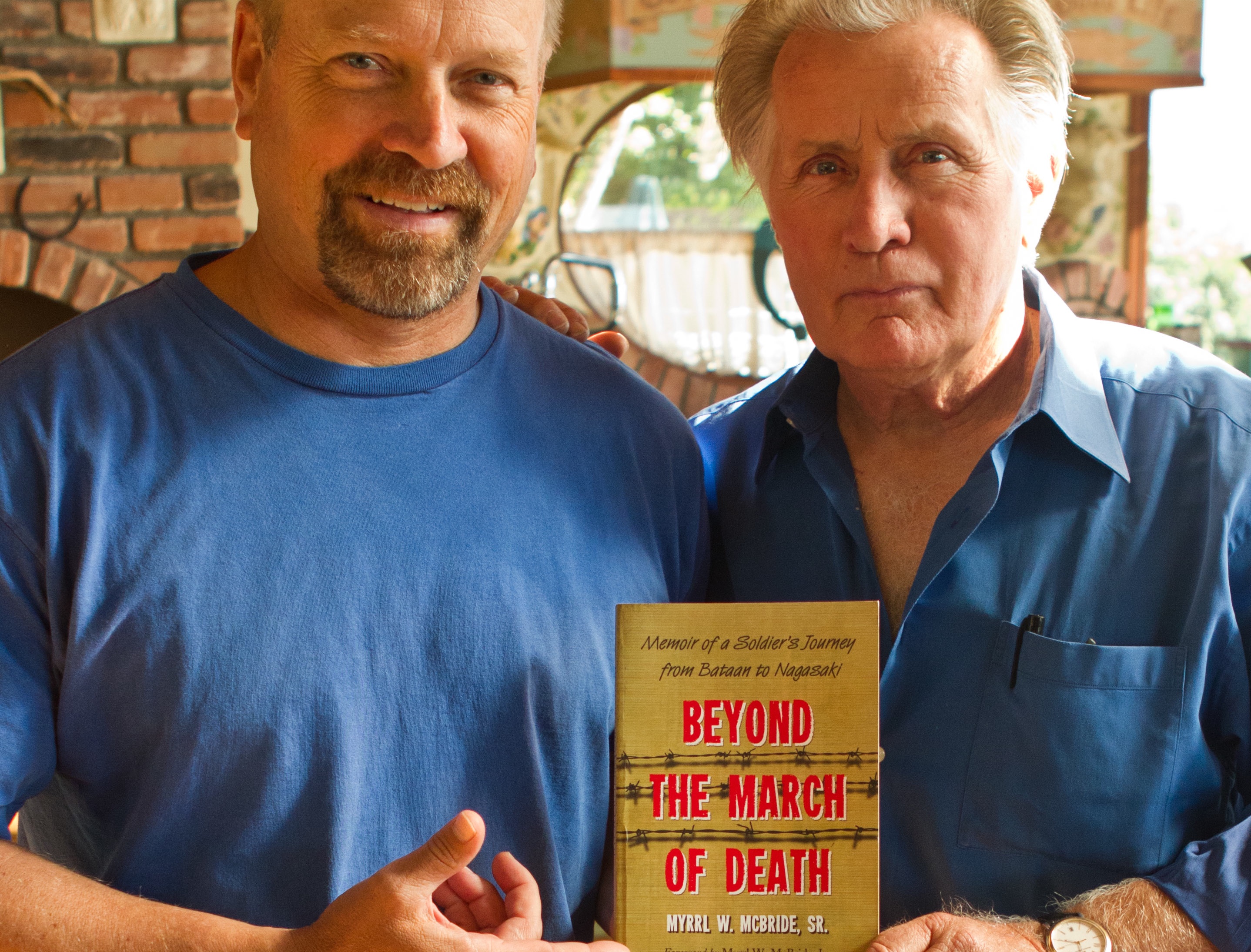 PRESIDENT BARTLET. On Tuesday he did the voice of Private Myrrl McBride (drawing on excerpts from this book) for my documentary feature film about the Bataan Death March, to be released early next year. He’s amazing.
boom
THIS IS WHAT FILMMAKERS LIVE FOR
Every once in a while you get to work with A-level talent in Hollywood and you realize it’s like driving a Cadillac after years of being stuck in a run down old beater. Suddenly you are with a professional. You don’t have to do any directing, your material is so simple the star simply gives it one glance and says, “Got it,” and he does. You just sit back and enjoy. Until almost as if taunting you he finally turns and says, “Any suggestions?” and all you can say is, “Yeah, let me put you in a feature film I want to make.” Dream on.
I spent Tuesday with the wonderful Martin Sheen who did part of the voiceover for my new movie about the Bataan Death March that I’ll be releasing next year. He’s absolutely the best.
#230) VIDEO LITERACY: It’s happening with science students
September 18th, 2012
Things are changing. When I ran my first 3 day intensive videomaking workshop in 2005 it was like bringing students into a whole new alien world. Seven years later it’s no longer much of a stretch — the students show up (as they did last weekend at Univ. of British Columbia) knowing just about all they need. Their pitches, with Powerpoint slides (some animated) already felt like films. We’re definitely creating a “video literate” world.
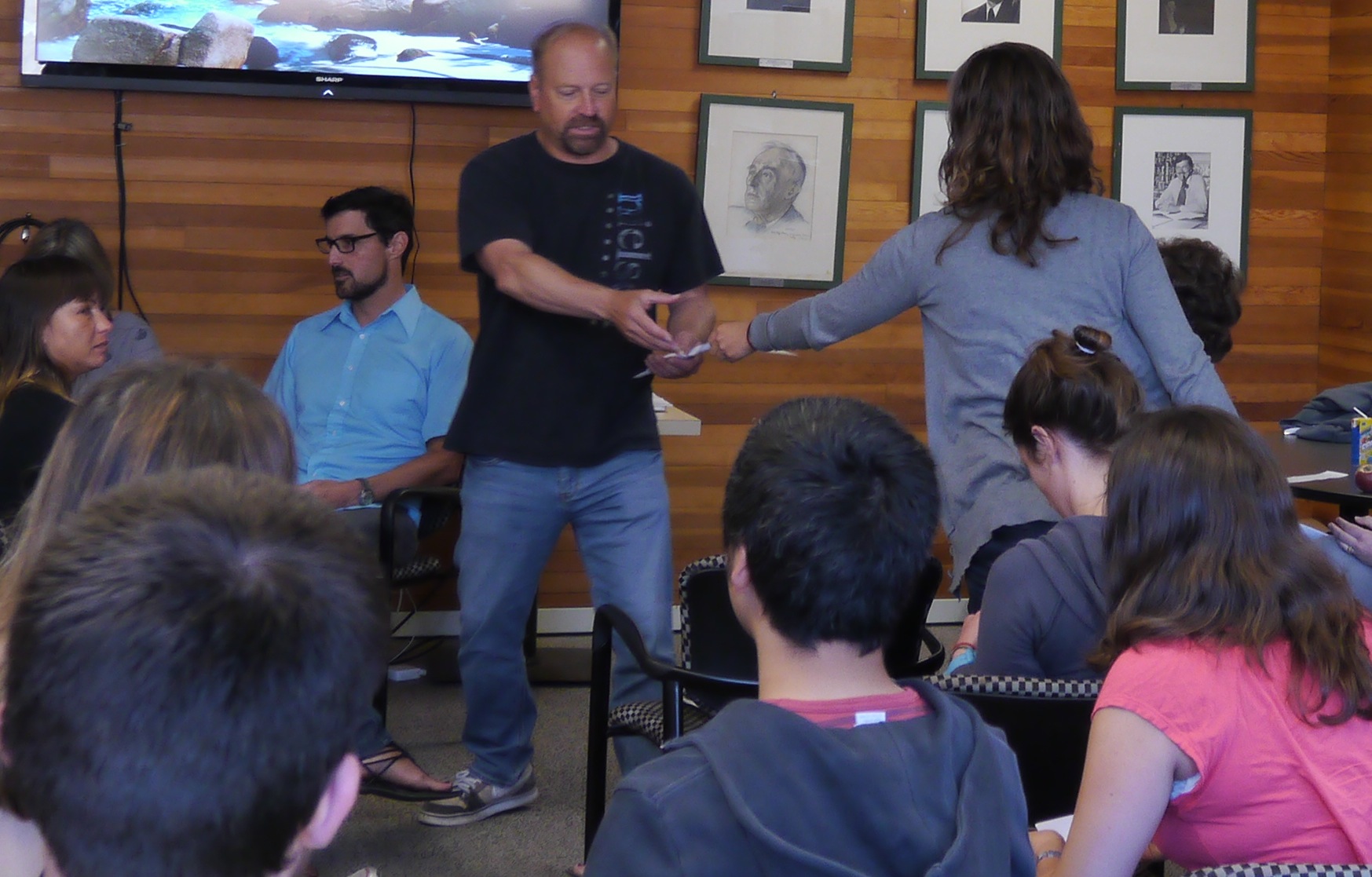
THE MOMENT OF TRUTH – Students pass in their ballots at the end of the 22 three minute pitches, voting for the 5 concepts that will get made. Seated in the light blue shirt is Dan McKinney of the Journalism School who did an awesome job of running the technical side of the workshop.
now
THE FUTURE IS NOW
In my book I mentioned the conversation I had with the Dean of the USC Cinema School in the mid-90’s in which she talked about how film is a language that for one hundred years we’ve all known how to read it, but only a chosen few have had access to the technology to be able to speak it. But now, thanks to the new technology, that’s all changing. In the future, EVERYONE, from history professors to people working at McDonalds, will “speak” in the language of video as easily as they will write emails.
I’m definitely seeing it.
Last week we ran the 11th iteration of my 3 Day Intensive Videomaking Workshop that I began in 2005 at Scripps Institution of Oceanography (the basic description of the workshop is here). Back then, there was no YouTube and people were only just starting to email videos to each other. In 2004 I made 4 short humorous ocean conservation videos with the Groundlings Improv Comedy Theater actors. They had warned me that “the Groundlings performances don’t work well on video”. That was because their previous experiences with video were limited primarily to people putting a camera on a tripod at the back of the theater and just recording the live performances. Today, 8 years later, all of the Groundlings make their own videos, and some, like my “Sizzle” co-star Mitch Silpa end up with viral videos like his “David Blaine” series that has scored in the tens of millions of views on Youtube (and is brilliant).
So that was then, this is now. And last week the 22 students from the TerreWeb program at U.B.C. presented 3 minute pitches that were essentially already films. They already told stories, they had Powerpoints slides that told stories, and some were animated, showing that they were already making their own films in their minds.
What’s more, teaching them to edit in Final Cut Pro — which used to be an alien experience — was mostly a ho hum experience for them — as in 5 minutes of the basics and they were already saying, “okay, we got it, you can leave us alone now.” The future is definitely arriving.